
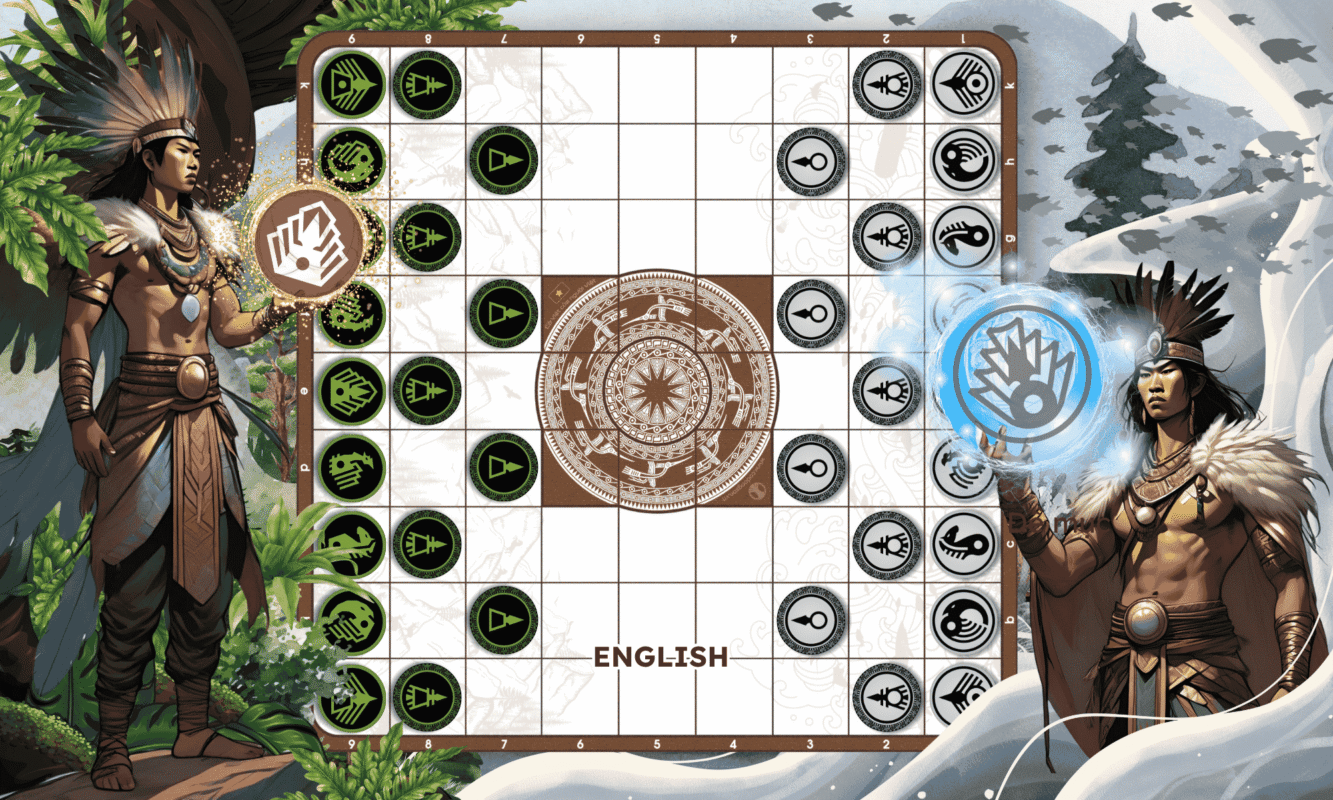
This is a simplified version of the official rules, outlining the most basic regulations for a quick overview. Please refer to the full basic rules for more detailed information.
Video
A. GENERAL RULES
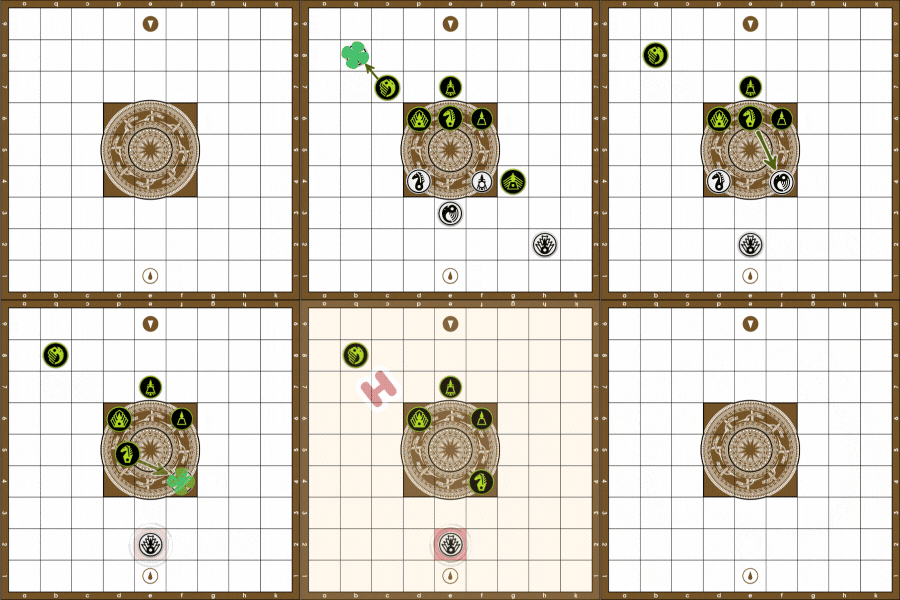
The board consists of 81 squares, divided into:
- the Battle Area (72 white squares),
- the Palace Area (the 9 central squares), and
- the Central Square e5 (01 circle).
The chess set contains a total of 36 pieces (18 per side):
- Mountain pieces (Green) and
- Ocean pieces (Gray).
- Each side utilizes 7 distinct piece types which belong to 3 different groups.
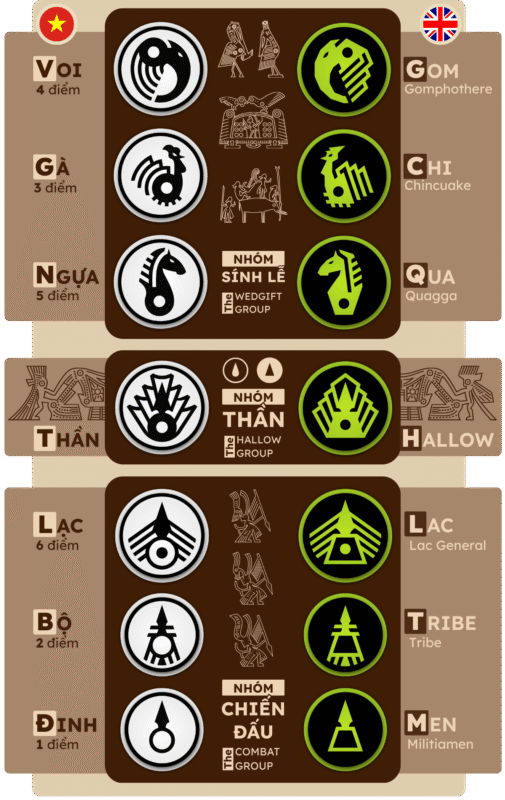
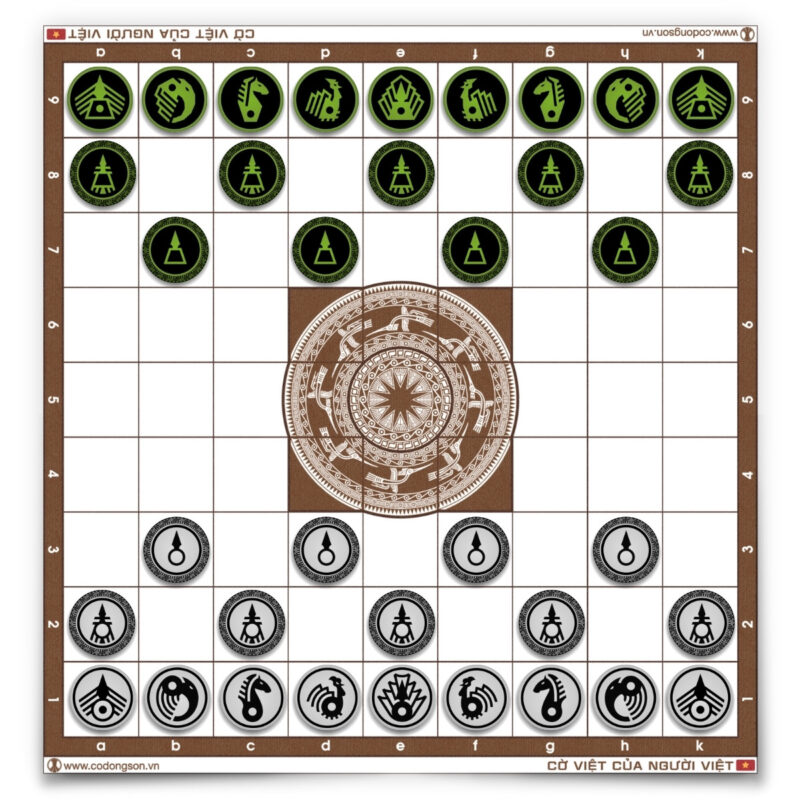
The Starting Position of Dong Son Chess.
The Ocean side makes the first move.
B. GAME OBJECTIVES
1. WINS
Method 1: “Palacentering” and Wedgift Offering
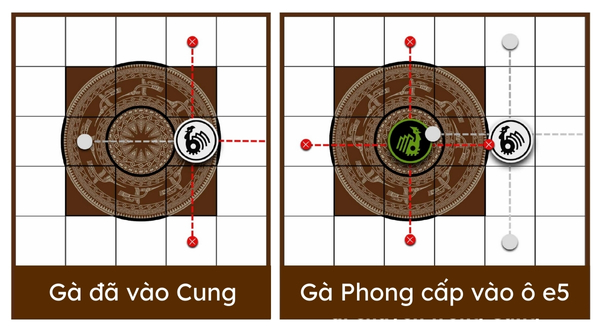
❶ Move the Hallow to the Center round e5;
❷ Have at least one Wedgift piece in the Palace;
❸ Ensure that your Hallow will not be checkmated on the opponent’s next move, AND the Wedgift piece(s) inside the Palace cannot be captured.
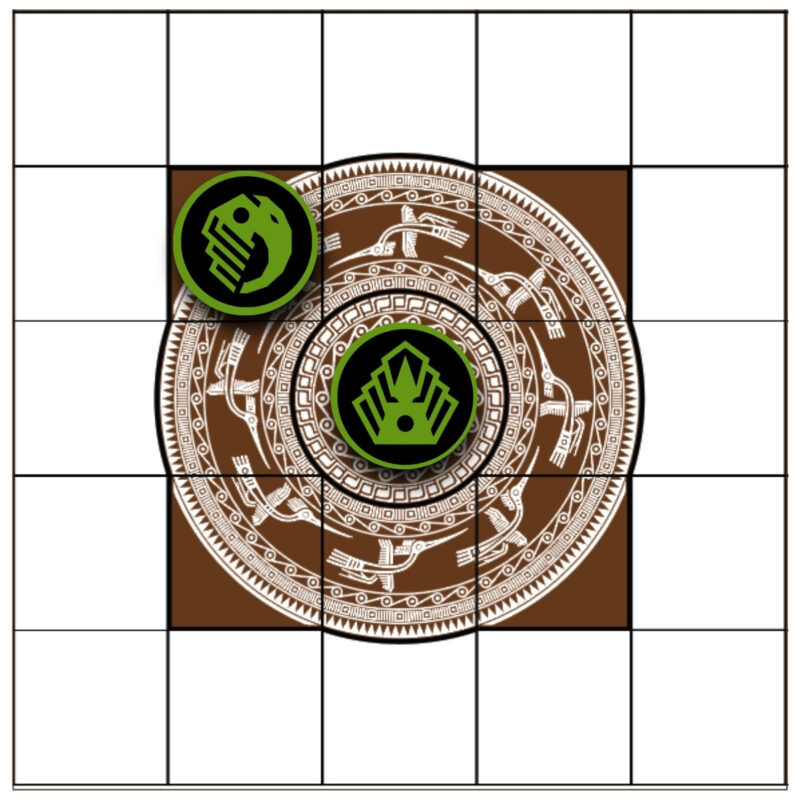
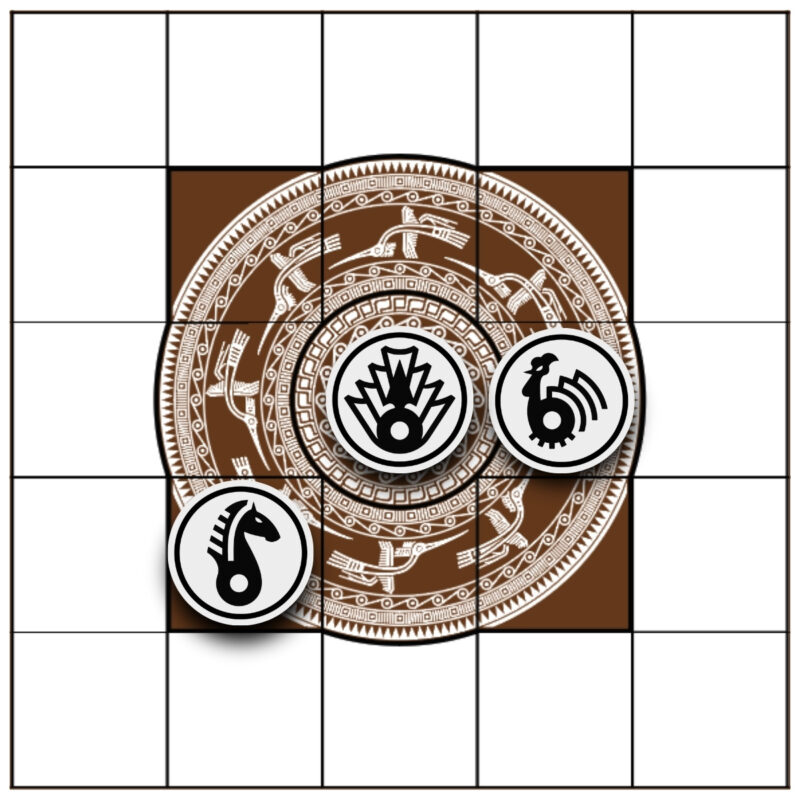
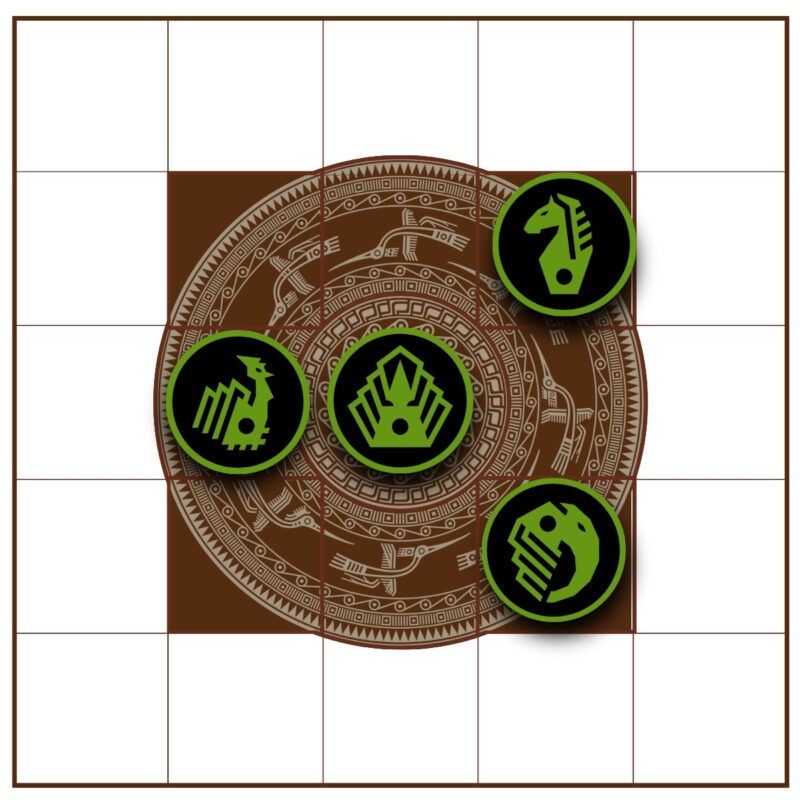
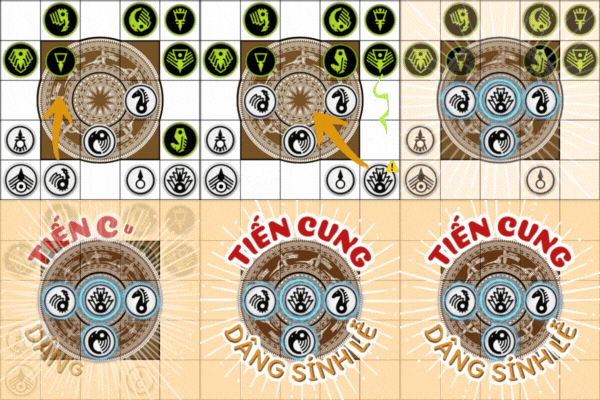
Method 2: “Checkmate” the Hallow
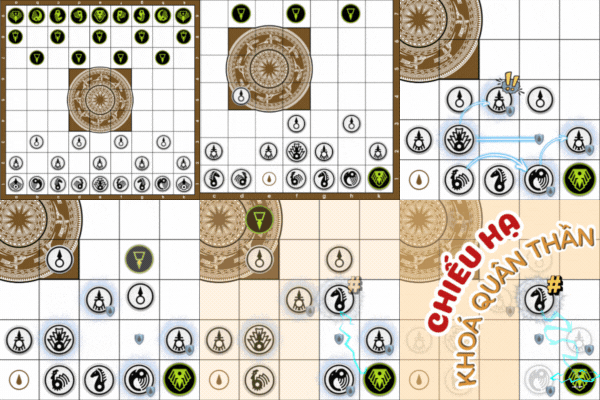
The player must put the opponent’s Hallow in a “threatened” in check where the opponent has no legal move to escape.
Method 3: Opponent Surrender
If the opponent voluntarily surrenders, the current player immediately wins the game, and the match ends.
2 – DRAWS
Case 1: Threefold Repetition:
A draw can be claimed when the identical position has occurred on the board three times (not necessarily consecutively).
Case 2: The 50-Move Rule:
One side offers a draw, and 50 consecutive moves are completed by both sides without any piece movement by a Tribe/Militiamen piece or any capture.
Case 3: Insufficient Material and Stagnation:
When one side does not have sufficient material to checkmate the opponent’s Hallow with a legal move, and the conditions for “Palacentering” cannot be met. (This includes positions where one side only has their Hallow remaining on the board.)
C. BASIC MOVES
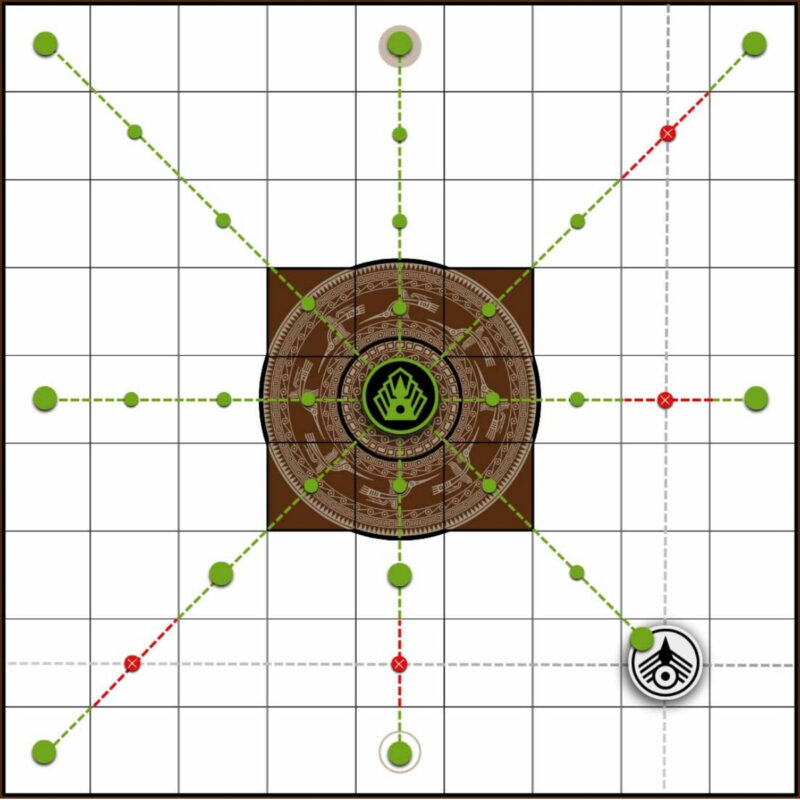
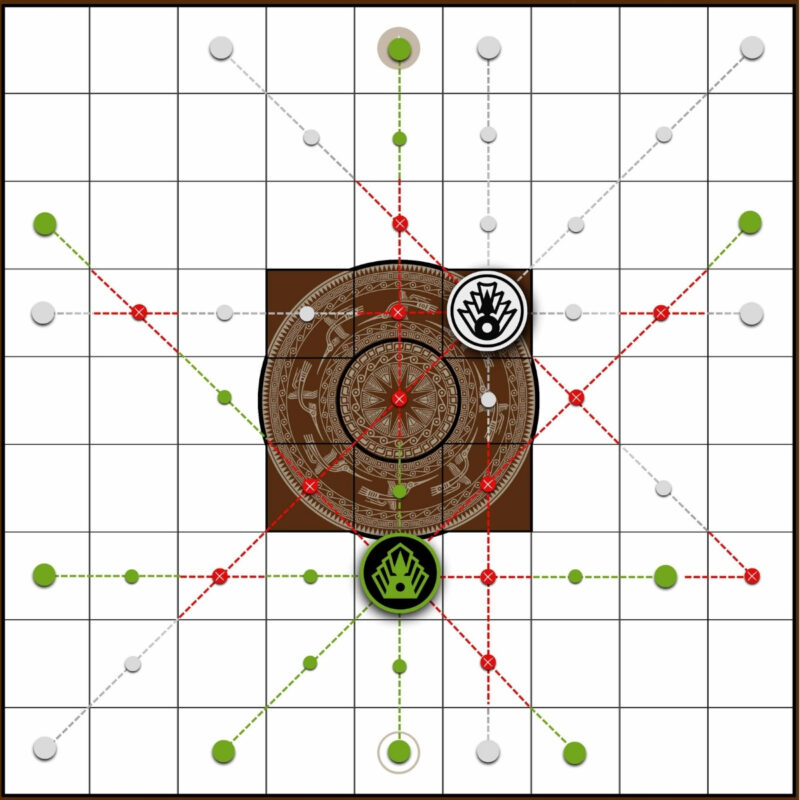
1 – THE HALLOW GROUP
Common features
- The Hallow can move into and out of the Palace.
- It can’t pass through (or move over) other pieces along its path.

- The Hallow can move any number of squares along the vertical, horizontal, or diagonal lines.
- It cannot move to squares that are controlled or attacked by the opponent’s pieces.
- Two Hallows cannot face each other directly without a piece in between.
2 – THE COMBAT GROUP
Common features
- Pieces in this group can move into and out of the Palace.
- They cannot pass through other pieces along their path.
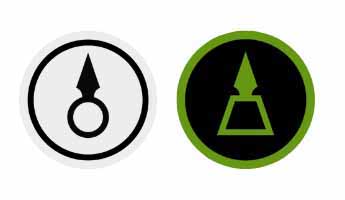
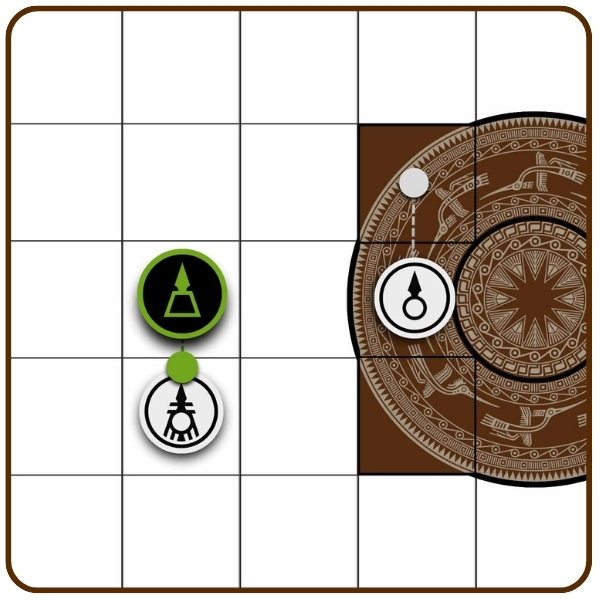
MILITIAMEN [Đinh]
Men [M – 1 point].
This piece moves and captures one square directly forward.

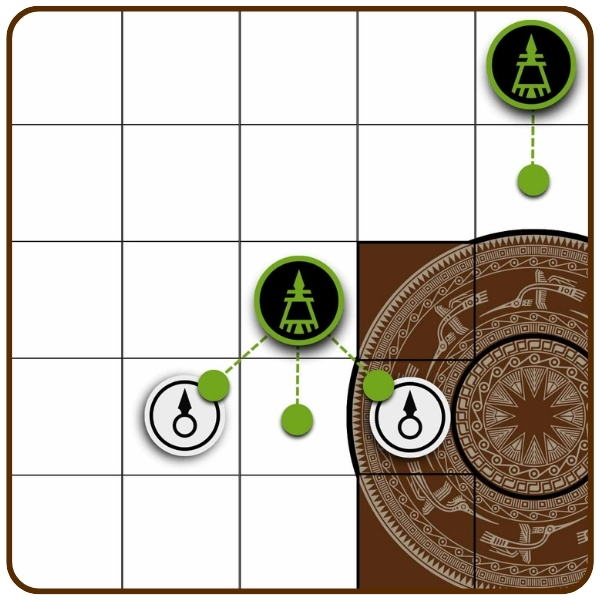
TRIBE [Bộ]
[T – 2 points].
This piece moves one square forward (non-capturing) and captures one square diagonally forward.

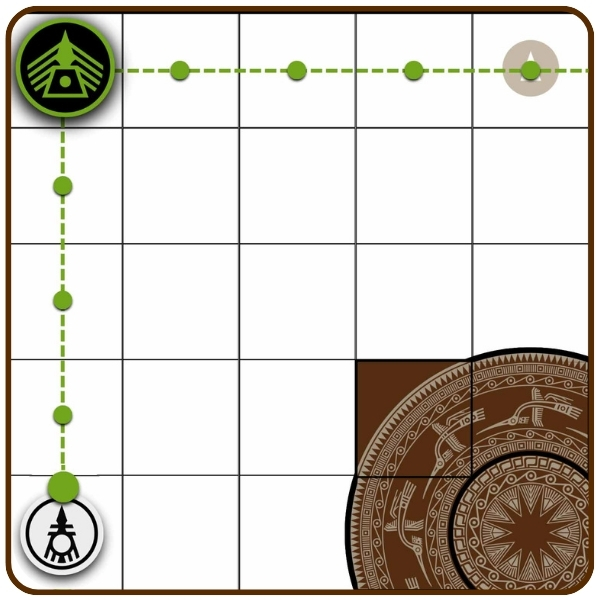
LAC GENERAL [Lạc]
Lac [L – 6 points].
This piece moves and captures any number of squares horizontally or vertically.
WEDGIFT PROMOTION
When a Tribe or Men pieces reaches the last horizontal row on either side, it will be “promoted” to a Gom, Qua or Chi.


3 – THE WEDGIFT GROUP
Common features
-
Once a Wedgift piece enters the Palace Area, its movement is restricted to within the Palace and it cannot move out.
-
Wedgift pieces inside the Palace cannot capture pieces that are positioned outside the Palace.
-
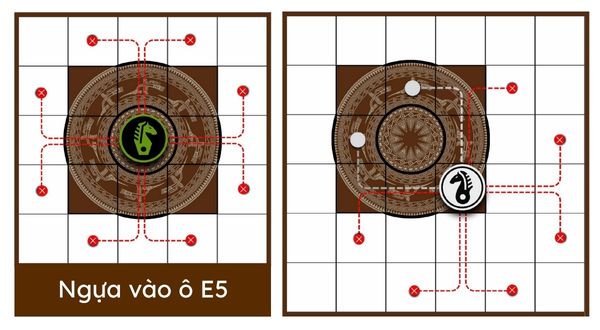
All pieces in this group have the unique ability to jump over (or leap over) other pieces along their path.

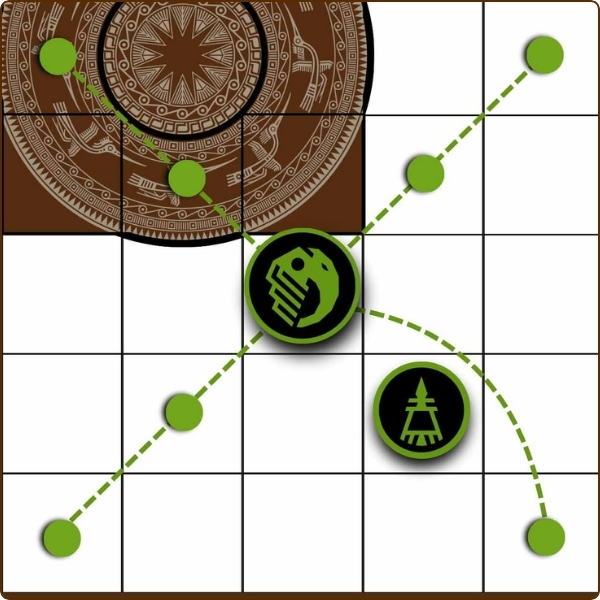
GOMPHOTHERE
GOM – G – 4 points
The Gom moves and captures 1 or 2 squares diagonally.

CHINCUAKE
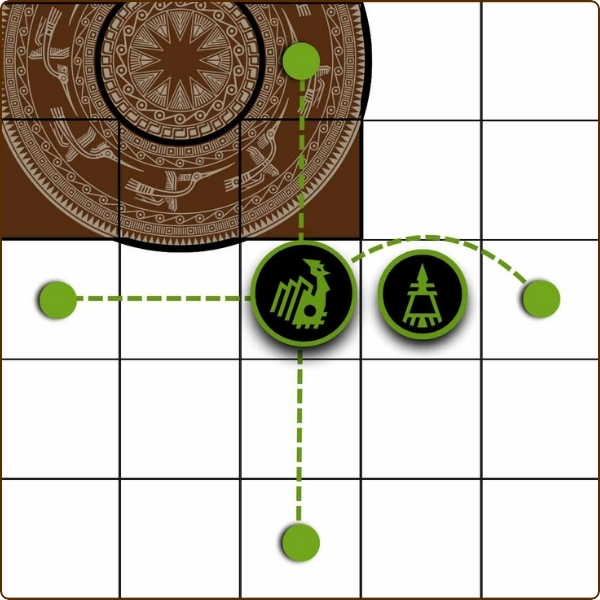
CHI – C – 3 points
The Chi moves and captures exactly two squares vertically or horizontally.

QUAGGA
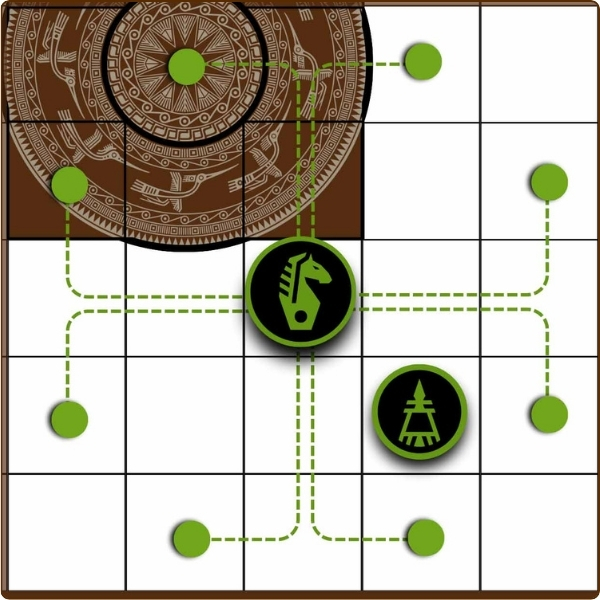
QUA – Q – 5 points
The Qua moves and captures in an “L” shape (a 3×2 or 2×3 square pattern).
SWAPPING
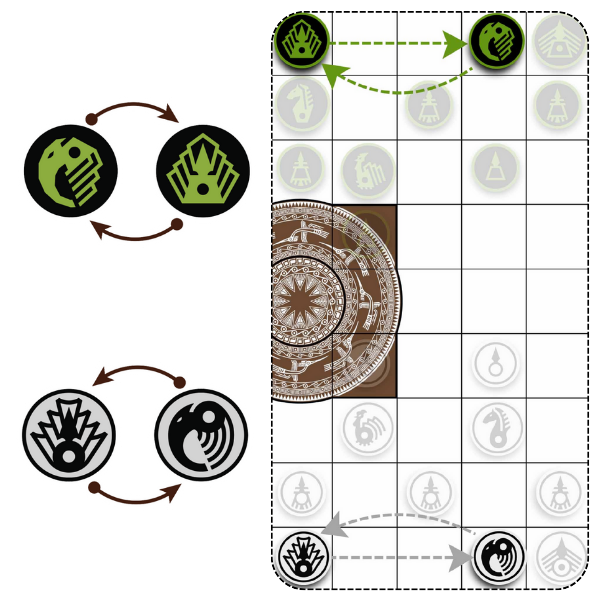
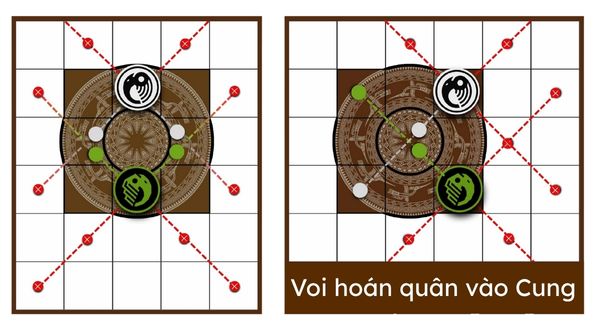
This is a special move where the Hallow exchanges positions with a friendly Gomphothere (Gom). The purpose is to allow the Gom to occupy the central square e5, thereby preventing the opponent’s Hallow from occupying or entering the Palace Area. This move is only permitted under the following three conditions:
❶ Neither the Hallow nor the involved Gom has moved previously in the game.
❷ There are no pieces standing between the Hallow and the Gom.
❸ The squares involved in the Swapping move are not currently attacked by an opponent’s piece.
We hope that this article has provided you with a clear grasp of the basic rules of Dong Son Chess, enabling you to start playing some exciting games. If you enjoy it, don’t forget to purchase an authentic Dong Son Chess set [here].
GIỚI THIỆU
LUẬT CỜ
CHIA SẺ
SẢN PHẨM
CHIA SẺ
GIẢI ĐẤU CỜ ĐÔNG SƠN LẦN 4 – HỘI CỜ CHÀO HÈ 2026: GIAO LƯU TRƯỚC THỀM NĂM HỌC MỚI
Giải đấu Cờ Đông Sơn Lần 4 – Hội Cờ Chào Hè 2026! Kỳ nghỉ...
Đọc tiếpMÃ ĐỀ ĐSTP12 – CỜ VIỆT SỬ TA – BÀI TẬP KHOÁ CỜ ĐÔNG SƠN TIÊN PHONG
🌟 MÃ ĐỀ ĐSTP12 – CỜ VIỆT SỬ TA Giải mã trọn vẹn ý nghĩa...
Đọc tiếpMÃ ĐỀ ĐSTP11 – CỜ VIỆT TRÍ VIỆT – BÀI TẬP KHOÁ CỜ ĐÔNG SƠN TIÊN PHONG
🌟 MÃ ĐỀ ĐSTP011 – CỜ VIỆT TRÍ VIỆT Nắm vững nghệ thuật “Hoán quân”...
Đọc tiếpBảng Xếp Hạng & Lịch Sử Các Ván Đấu của Giải Cờ Đông Sơn Lần 3 – CUP KHỞI NGUỒN 2026
bản tin cập nhật kết quả của Giải Cờ Đông Sơn lần 3 vào ngày...
Đọc tiếpMÃ ĐỀ ĐSTP10 – CỜ VIỆT LAN TOẢ – BÀI TẬP KHOÁ CỜ ĐÔNG SƠN TIÊN PHONG
Quyền năng tối thượng của quân Thần và kỹ năng ghi biên bản chuẩn xác...
Đọc tiếpTHÔNG BÁO CHÍNH THỨC: GIẢI ĐẤU CỜ ĐÔNG SƠN LẦN 3 – CUP KHỞI NGUỒN 2026 ĐÃ SẴN SÀNG!
Đánh dấu cột mốc sinh nhật đầy tự hào trong tháng 8 rực rỡ, Cờ...
Đọc tiếpMÃ ĐỀ ĐSTP09: CỜ VIỆT KẾT NỐI – BÀI TẬP KHOÁ CỜ ĐÔNG SƠN TIÊN PHONG
Sính lễ dâng vua không chỉ là vật phẩm, mà còn là biểu tượng đỉnh...
Đọc tiếpMÃ ĐỀ ĐSTP08: CỜ VIỆT TỰ HÀO – BÀI TẬP KHOÁ CỜ ĐÔNG SƠN TIÊN PHONG
Lăng kính lịch sử thời Văn Lang và triết lý Âm Dương phương Đông được...
Đọc tiếp